Grounded Action Collective: Sitting with What's Scary
The Grounded Action Collective is a free Friday morning virtual process group that helps people transform political overwhelm into strategic, sustainable action. Each session interweaves nervous system regulation with a topic informed by activists, leaders, and allies who've shared their wisdom and teachings with the world in various ways. This is a co-creative space to come together not to solve but for solidarity as we work to determine the next right steps—however that looks for each of us as individuals and as a collective. You don't need to attend all sessions—come when you need it or when you're free, pending space availability. Click here to learn more, sign up for future sessions, and/or receive the weekly recap newsletter.
This Week’s Primary Resource
Much of this week’s understanding and inspiration continues to come from the Truthout podcast Movement Memos, episode: Burnout Is Not Inevitable: Building Movements That Can Hold Us with organizer and WildSeed Society strategist Aaron Goggans.
There is SO MUCH gold in this episode. I highly recommend it as a listen.
Reflections from our second Grounded Action Collective gathering on Feb. 6, 2026
When we checked in this week, we named what's present: Anger about the Epstein files. Disgust. Shock at the brazenness of it all. The way this administration is deliberately turning us against each other instead of looking at the systems and causes that allow this to happen.
We also named something crucial: This administration is trying to overwhelm us, which prevents us from having human connection. Showing up for each other in spaces like this is resistance.
Last week, we built a foundation—understanding how our nervous systems work and what happens when political overwhelm hits. This week, we went deeper: learning to sit with what's scary without immediately reaching for fixes, plans, or numbing out.
The Problem We're Trying to Solve
Here's what happens for most of us when political fear or rage shows up:
The Reactive Cycle:
Emotion arises (terror about deportations, rage about policy, grief about rights being stripped) → Protective parts rush in → We immediately jump to problem-solving, planning, doom-scrolling, self-criticism, or numbing out → This reaction tells our nervous system there IS danger → We get more overwhelmed → The cycle continues.
This keeps us stuck. We're either in fight-or-flight trying to solve everything RIGHT NOW, or we've collapsed into shutdown where nothing feels possible.
What we need instead:
The ability to feel the fear AND know we're safe enough right now to think clearly. That's what this week's practice builds.
The Core Practice: Pendulation
Pendulation means moving between the edge of difficult emotion and grounded safety—like a pendulum swinging back and forth. Each time we complete this cycle, we're teaching our nervous system: “I can feel this AND be okay."
The 11-Step Process:
1. Find the Edge
Sense the emotion in your body (tightness in chest, pit in stomach, heat in your face) or visualize it. Find where you can witness it without protective parts rushing in to fix, escape, or plan.
2. Breathe & Witness
Stay right at that edge. Just notice. Just breathe. Don't try to change it.
3. Catch Reactive Pathways
Notice when your mind goes to: “I need to quit my job/move to Canada/fix this NOW" or “I'm such a failure for not doing more" or planning 47 steps ahead.
4. Name It
“I recognize this is my system feeling overwhelmed and unsafe."
5. Return to Emotion
Pull attention back to just sitting with the feeling in your body.
6. Wait for Softening
Stay with it until you feel even a tiny shift—a softening, a deeper breath, a slight ease.
7. Pendulate to Grounding
Once you feel that shift, ground yourself:
Feel your body weight in the chair
Feel your feet on the ground
Look around your space
Take grounding breaths
This tells your nervous system: “We're here. We're safe right now."
8. Return to Emotion
Go back to the feeling. Sit with it until another softening.
9. Repeat the Cycle
Continue: emotion → softening → grounding → emotion → softening → grounding
10. Full Breath
Continue until you feel like you can fully breathe and think “I'm okay right now in this moment."
11. Then Decide
Now—and ONLY now—from this grounded state, ask: “What's the next best thing for me to do?"
This might be:
Something about the situation that triggered the emotion
Sleeping on it and addressing it tomorrow
Just getting your tasks done for the day
Nothing related to the original fear
The key: You're making this decision from groundedness, not panic. This is choice, not reaction.
Tools for Deeper Work: Naming What You're Actually Feeling
A group member shared a powerful parallel from fantasy fiction: knowing the “name" of something allows you to have power over it. Think of how in stories, naming a demon or spirit gives you control over it.
The same is true for what we're feeling and believing.
When we can name “I'm in fight-or-flight" or “I'm feeling terror about deportations" or “I believe I'm powerless"—we gain power over those states instead of being controlled by them.
But sometimes we don't have the words. We just know we feel BAD or OVERWHELMED or ACTIVATED.
Two tools can help:
The Emotion Wheel - helps you move from “I feel bad" to “I feel disgusted" or “I feel helpless" or “I feel betrayed." The specificity matters. It gives you something concrete to work with in the pendulation practice. Click here to see an emotion wheel and get more tips on working with it.
Core Beliefs - helps you identify what you might be believing in that moment: “I'm powerless." “Nothing I do matters." “I should have seen this coming." “I'm not doing enough." When you can name the belief, you can work with it instead of being consumed by it. Click here to learn more about identifying core beliefs and why this can have such a big impact.
The Necklace Metaphor: Creating Space to Work with One Thread
One of the most helpful images from this week's session:
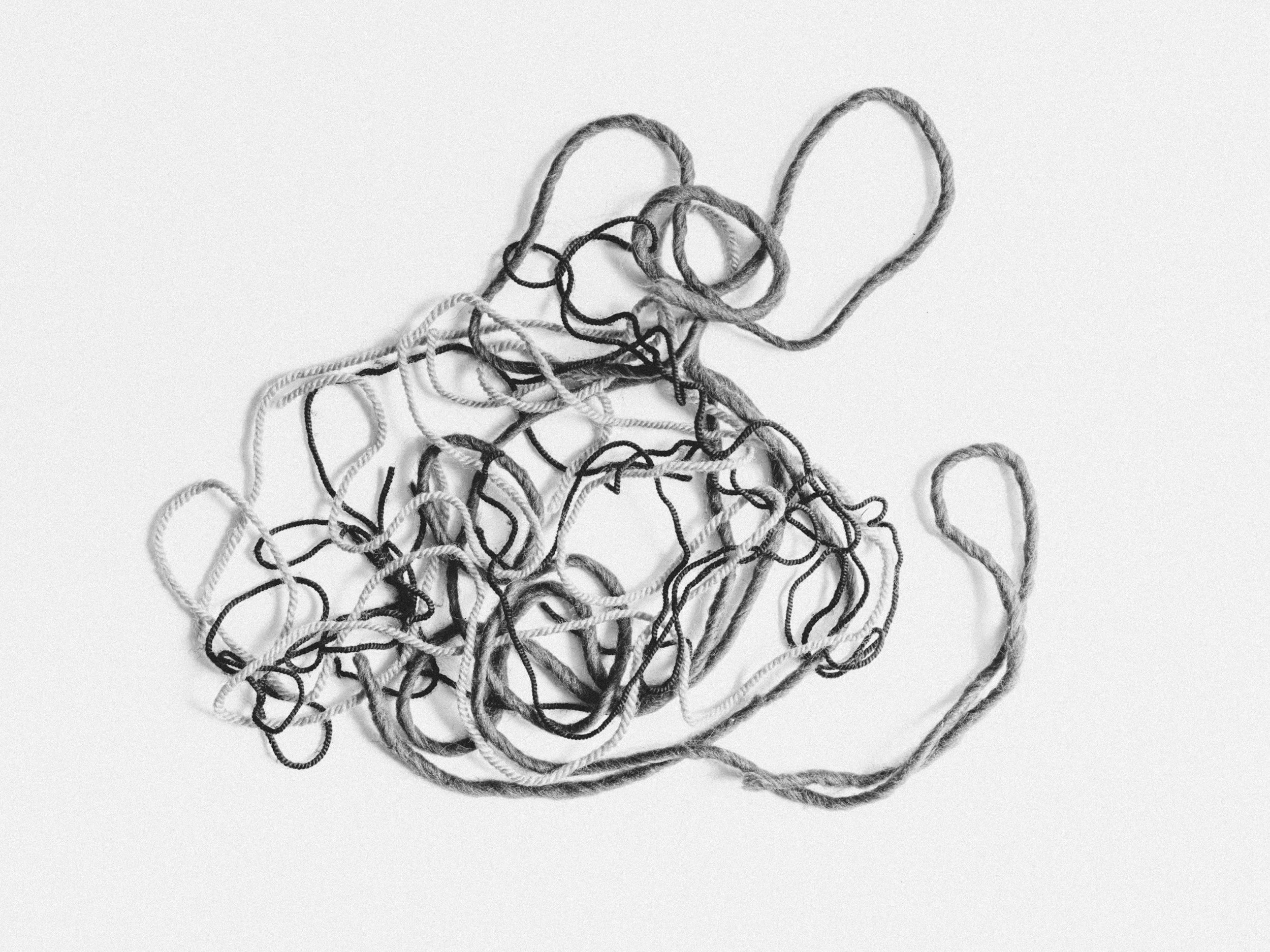
Healing, understanding, and learning are like trying to untangle a mass of necklaces.
You can't just pull. If you yank on one necklace, you tighten all the knots. You have to massage the ball first. Start to see how the threads are connected. Pull one at a time until you find where it's tangled with others. Then go back to the larger ball to continue loosening and exploring.
Creating the “space" to see the necklaces allows us to focus on one instead of getting overwhelmed by the full tangle each time.
This is what pendulation practice does. It creates space between the emotion and the overwhelm so we can actually work with what's there.
When you're in fight-or-flight or shutdown, you're looking at the whole tangled ball, and it feels impossible. When you practice pendulation, you're creating just enough space to work with one thread—one feeling, one belief, one sensation—without getting lost in the whole mess.
Over time, you untangle more. You learn the patterns. You get faster at it. But it starts with creating space to see what you're working with.
Self Check-In:
What does your “tangled ball" feel like right now? Can you identify just one thread to work with—one emotion, one belief, one sensation in your body? You don't have to untangle it all. Just notice one thread.
Why This Matters Politically
Every time you complete the pendulation cycle, you're building capacity to:
Respond strategically instead of reactively
Think with nuance and complexity
Collaborate effectively with others
Sustain your engagement for the long haul
Access creativity and values-aligned solutions
The decisions we make from groundedness versus panic are profoundly different in quality and energy.
And here's what we named in the group: What would change if movements prioritized nervous system regulation as essential infrastructure rather than self-indulgent distraction?
We can't access strategic, values-aligned action from dysregulated states. This isn't about “self-care" as a luxury. It's about building movements that can actually hold us and sustain us for what's ahead.
What We Named in Discussion
On freeze and the pattern of trying to re-activate through social media:
Several people recognized the cycle of feeling numb, then reaching for TikTok or news to feel SOMETHING—anger, sadness, anything. But that keeps us in overstimulation, not regulation. What helps is doing LESS for 30 minutes, not more.
On not being able to see how our action leads to the big change we want:
When you're frozen because you can't see how your action leads to ICE being abolished or rights being restored, you're expecting yourself to see the whole untangled necklace before you start. The practice is: just do the next right thing. Your body and brain will come up with more options the more you do simple tasks that help, even if they don't complete the solution.
On holding both truths:
“Things are genuinely dangerous" AND “My nervous system might be making it harder to respond well." Both can be true simultaneously. Regulation doesn't mean denying the danger—it means being able to think clearly ABOUT the danger.
On what helps us feel safe enough to stay curious during overwhelming political moments:
Calling safe friends
Turning off devices and going outside
Naming the state: “I'm activated right now"
Remembering this is designed to overwhelm us—and choosing connection anyway
The Work
Your sensitivity brought you here. Your inability to ignore injustice brought you here. Those aren't problems to fix—they're gifts to tend.
The work this week is practicing pendulation when political content activates you:
Pause and name your nervous system state
Notice what core belief might be activated
Try even 30 seconds of pendulation—feel the emotion, notice it softening, ground yourself
Then ask: What's the next best thing to do from HERE?
You don't have to be perfect at this. You're building new neural pathways. Be patient with yourself.
Self Check-In:
Where is your nervous system right now? Can you name what state you're in? Take a moment to try one cycle of pendulation: Feel the edge of whatever emotion is present → stay with it until you notice even a tiny softening → ground yourself (feet on floor, look around your space, take a breath) → notice what's different.
From The Group - What We're Practicing This Week
Using the emotion wheel to get more specific about what “bad" or “overwhelmed" actually means
Identifying core beliefs that get activated by political news
Trying 30 seconds of pendulation before reaching for the phone
Noticing when protective parts rush in to fix/plan/numb
Remembering: connection is resistance
The Grounded Action Collective meets Friday mornings. We're building capacity together—not just to survive this moment, but to build the world we're fighting for. Join us.